Scan handwritten recipes
Turn handwritten recipe cards into keepsakes you can actually use.
Kinbite helps preserve original recipe cards while giving the people you share them with a cleaner digital recipe to cook from, share, and remember.
The original card still matters
From fragile card to usable recipe
A practical archive for food history
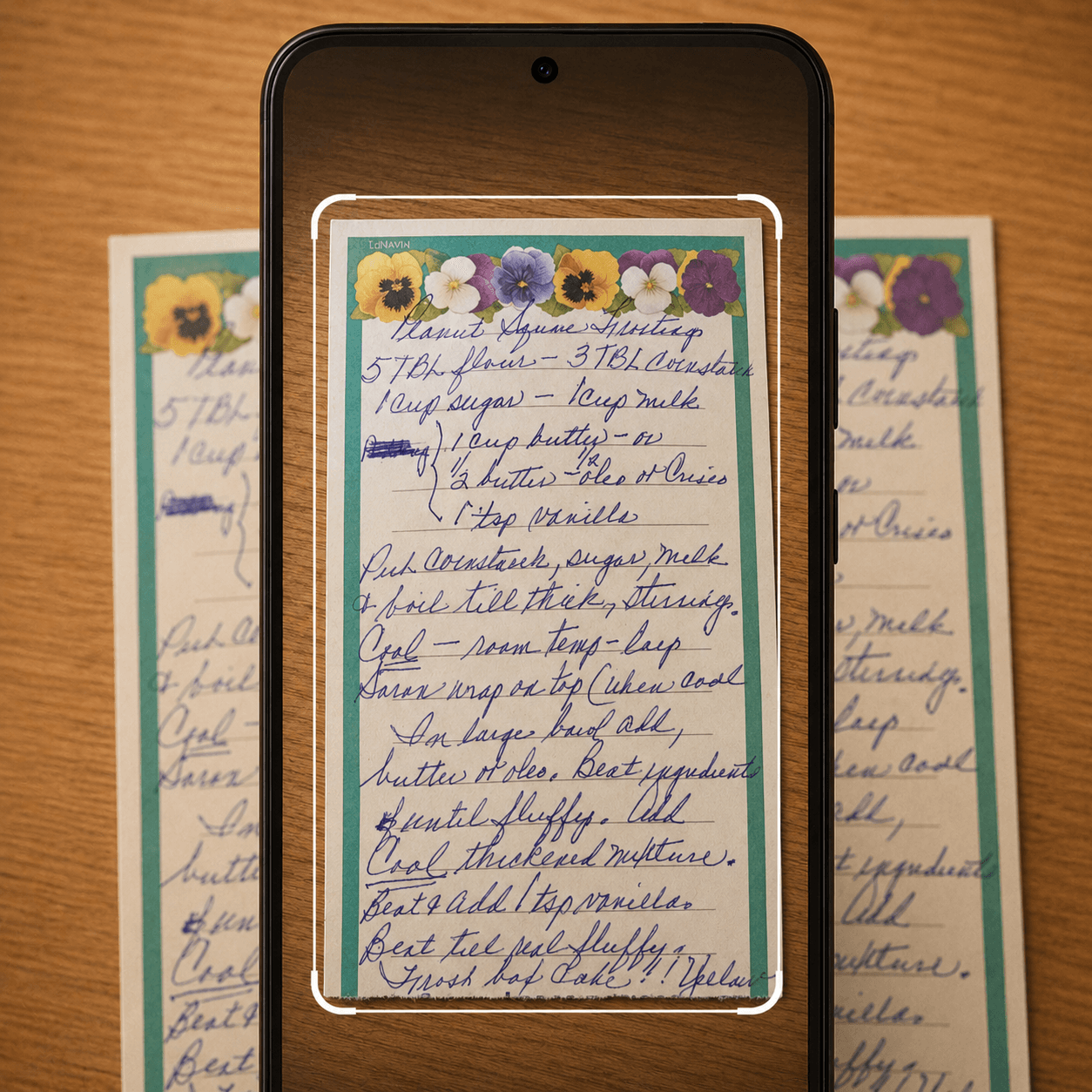
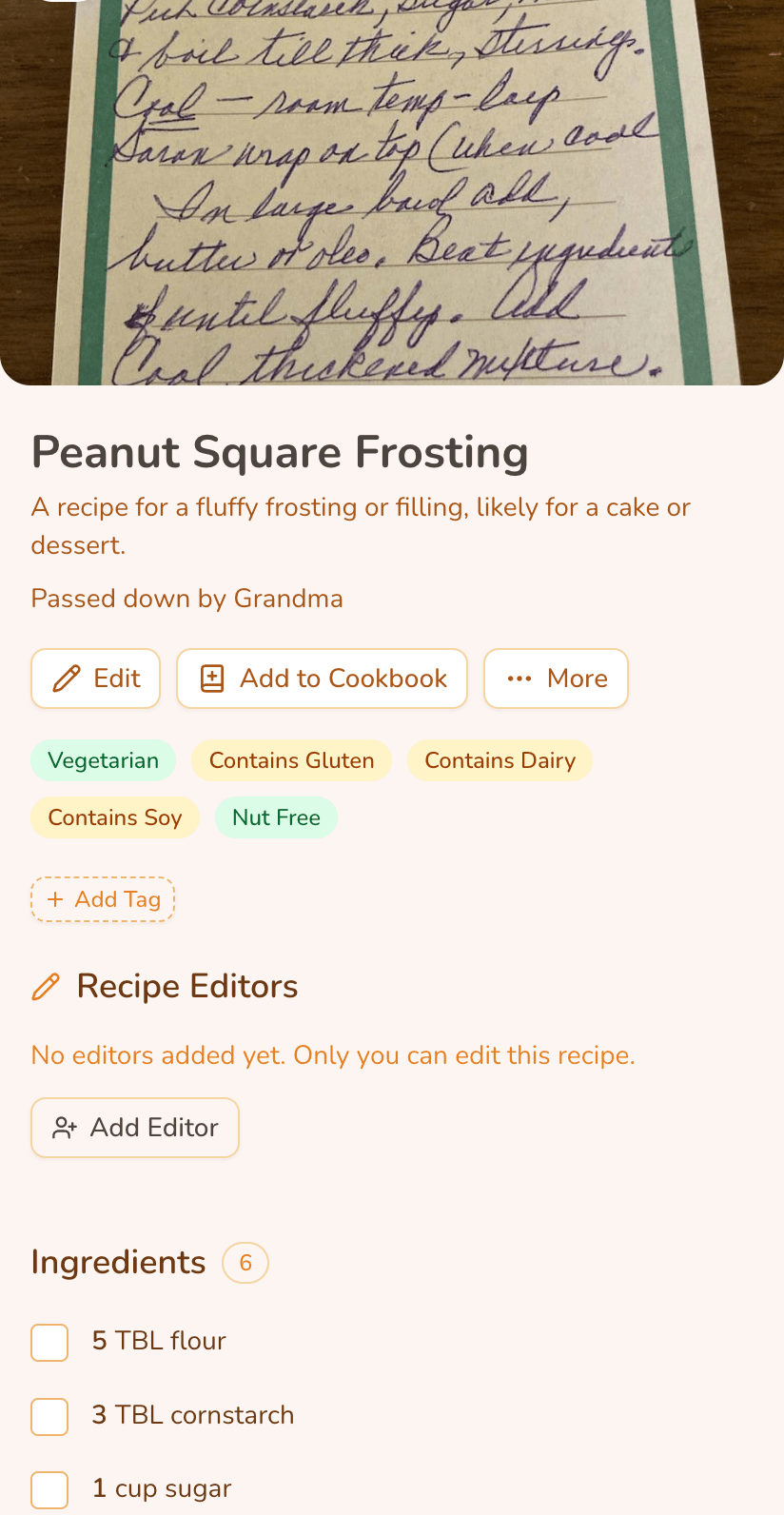
Card scanned
Original card preserved. Clean recipe ready to cook.
01
The original card still matters
Handwritten recipe cards carry more than instructions. They show the handwriting, edits, stains, and notes that make a recipe feel connected to a real person. Scanning those cards protects the original memory while making the recipe easier to find later.
Kinbite lets you keep the scan with the recipe, so the original card is not separated from the dish it belongs to.
02
From fragile card to usable recipe
A digital cookbook makes old cards easier to search, share, and cook from. The scanned image preserves the keepsake, while the recipe record can hold ingredients, steps, photos, tags, and the stories behind the dish.
Save original scans alongside the typed recipe.
Preserve handwriting and margin notes as part of the memory.
Share the recipe without passing around the only physical copy.
03
A practical archive for food history
Digitizing handwritten cards gives your people a backup, but the goal is not to flatten them into plain text. The goal is to keep the useful recipe and the original artifact together.
Explore more
More ways to build a cookbook your people will actually use.
Recipe preservation
Keep recipes, stories, handwritten cards, photos, and voice notes together for family, friends, and future generations.
Read moreShared cookbook app
Build a shared cookbook your favorite people can contribute to, cook from, and revisit from anywhere.
Read moreVoice recipe recording
Record the shortcuts, pauses, stories, and small details that are easiest to explain out loud.
Read moreStart preserving the recipes that still sound like home.
Create a free Kinbite cookbook and give your people one place for recipes, voices, handwritten cards, photos, and the stories behind them.